Here's a truth that might sting a little: ranking #1 on Google doesn't automatically mean your phone will ring off the hook.
Sure, high rankings feel great. They're validation that you're doing something right. But if those rankings aren't translating into actual leads, emails in your inbox, form submissions, phone calls, then what's the point?
The reality is that SEO in 2026 has evolved way beyond chasing positions on a search results page. Google's algorithm (and the AI-powered search experiences popping up everywhere) now considers a complex web of signals that determine not just if you show up, but whether people trust you enough to take action.
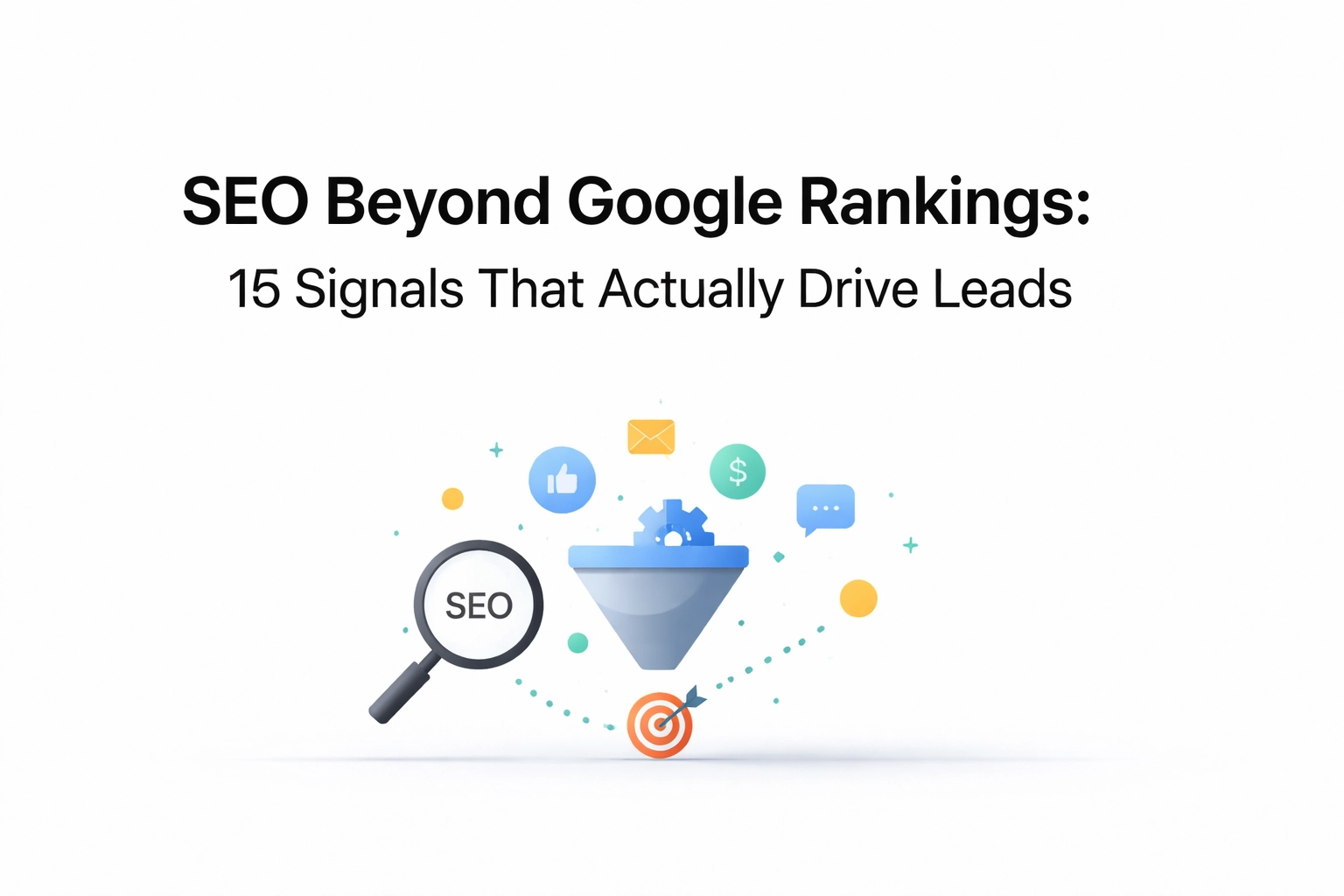
Let's break down 15 signals that actually move the needle on lead generation, not just your ranking.
Local Citations: Your Digital Footprint Matters
1. Consistent NAP Information Across Directories
NAP stands for Name, Address, and Phone number. When your business information is consistent across Google Business Profile, Yelp, industry directories, and local listings, search engines see you as legitimate and trustworthy. Inconsistencies? They create doubt, for algorithms and potential customers.
2. Industry-Specific Directory Presence
Generic directories are fine, but industry-specific ones carry more weight. If you're a web design agency, being listed on platforms like Clutch, DesignRush, or local chamber of commerce sites sends stronger relevance signals than a random free listing site.
3. Local Review Velocity
It's not just about having reviews, it's about consistently getting new ones. A steady stream of recent reviews tells Google your business is active and people are engaging with you right now. That freshness factor matters for local search visibility and builds confidence with prospects doing their research.
Social Proof: The Trust Accelerator
4. Review Quality and Sentiment
Five stars are nice, but detailed reviews that mention specific services, outcomes, or team members carry more weight. These reviews help searchers self-qualify ("Oh, they helped a business like mine!") and give search engines richer context about what you actually do well.
5. User-Generated Content and Mentions
When customers share your work on their own channels, tagging you on LinkedIn, posting about their new website on Instagram, or mentioning you in a forum, that's gold. It's authentic endorsement that algorithms increasingly recognize as a trust signal.
6. Case Studies and Portfolio Visibility
This one's a hybrid. Case studies serve as social proof for visitors and create keyword-rich content that search engines love. When someone searches "web design for contractors" and your case study about a contractor's website redesign shows up, you've just attracted a pre-qualified lead.
Brand Mentions: Authority Without the Link
7. Unlinked Brand Mentions
Here's something a lot of people miss: Google can recognize when your brand gets mentioned online, even without a hyperlink. Being talked about on industry blogs, in podcast show notes, or in news articles signals that you're a known entity in your space. That builds authority.
8. Branded Search Volume
When people search for your company name directly, that's a powerful signal. It means your marketing efforts (online and offline) are working. It tells search engines, "Hey, people are specifically looking for this brand." If your branded search volume is growing, you're building real recognition.
9. Thought Leadership Presence
Are you contributing guest articles? Speaking on podcasts? Getting quoted in industry roundups? This kind of earned media creates a web of brand mentions and backlinks that compound over time. Plus, it positions you as an expert: which makes leads more likely to trust you when they land on your site.

UX Metrics: The Silent Conversion Killers (or Helpers)
10. Page Speed and Core Web Vitals
We've talked about this before: your website speed will make or break your business. But it's worth repeating: slow sites kill conversions. Google measures how fast your page loads, how quickly it becomes interactive, and how stable the layout is. Poor scores hurt rankings and frustrate visitors into bouncing.
11. Bounce Rate and Dwell Time
If someone clicks your link from Google and immediately hits the back button, that's a bad sign. But if they stick around, scroll through your content, and click to other pages? That tells search engines your content actually delivered on its promise. More importantly, engaged visitors are way more likely to convert.
12. Mobile Experience Quality
Over 60% of searches happen on mobile devices. If your site is clunky, hard to navigate, or slow on phones, you're losing leads before they even see your offer. A custom web design approach ensures your mobile experience is built for conversion, not just "technically responsive."
Content and Intent Signals: Attract the Right People
13. Search Intent Alignment
Not all traffic is good traffic. If your content ranks for keywords that don't match what you actually offer, you'll get visitors who bounce immediately. The key is creating content that aligns with buyer intent: people actively looking for solutions you provide, not just information browsers.
14. Clear Conversion Pathways
Great content means nothing if visitors don't know what to do next. Every page on your site should have a clear, logical next step. Strategic CTA placement: above the fold, within content, at the end of posts: guides visitors toward becoming leads without feeling pushy.
15. Content Depth and Topical Authority
Google rewards sites that demonstrate deep expertise on a topic. Instead of writing one surface-level post about "web design tips," having a cluster of interconnected content: covering design, speed, accessibility, and conversions: signals that you're a genuine authority. That topical authority boosts all your related pages.
The Shift From Vanity Metrics to Business Outcomes
Here's the bottom line: chasing rankings as your primary SEO goal is outdated. The businesses winning in 2026 are the ones measuring what actually matters:
- Qualified leads generated from organic search
- Conversion rates from landing pages
- Revenue influenced by SEO efforts
Rankings are just one piece of a much bigger puzzle. When you optimize for these 15 signals: local presence, social proof, brand authority, UX quality, and intent-aligned content: you build a lead generation engine that works whether you're position #1 or position #5.
Ready to Build a Website That Converts?
If your current site looks good but isn't driving leads, there's likely a disconnect somewhere in these signals. Maybe your mobile experience is lacking. Maybe your content doesn't match buyer intent. Maybe you're invisible in local directories.
At Create Pro Media, we build websites designed for performance: not just aesthetics. We focus on the signals that actually drive business results, so you're not just ranking… you're winning.
Let's talk about what's holding your site back.