AI-powered web design tools promise the world: professional websites in minutes, no coding required, and costs that won't break the bank. Sounds too good to be true? Well, it kind of is.
Don't get me wrong, AI design tools are incredible. They've democratized web design and made it possible for anyone to create a functional website. But here's the thing: most people are using them wrong. They're making critical mistakes that result in generic, poorly-performing websites that look like every other AI-generated site on the internet.
This is the first post in our five-part series on mastering modern web design. Today, we're diving into the seven biggest mistakes businesses make with AI web design, and more importantly, how to fix them. Let's jump in.
1. Treating AI Like Your Creative Director (Instead of Your Assistant)
Here's the biggest mistake we see: businesses hit "generate," accept whatever the AI spits out, and call it a day. The result? A website that looks exactly like hundreds of others, with zero personality or brand identity.
AI tools are powerful, but they're not creative directors. They don't understand your business, your customers, or what makes you unique. They're pattern-matching machines that create "safe" designs based on millions of other websites.
The Fix: Think of AI as your starting point, not your finish line. Use the AI-generated layout as your foundation, then make it yours. Swap out those generic fonts for something that matches your brand personality. Replace the stock photos with real images from your business. Adjust the layout based on how your actual customers behave and what they're looking for.
The goal isn't to use AI to avoid design work, it's to use AI to speed up the design process while still creating something uniquely yours.

2. Skipping Brand Consistency (The Trust Killer)
AI doesn't know your brand. It can't tell the difference between a law firm and a yoga studio, a tech startup and a bakery. When you don't inject your branding into an AI-generated site, you end up with something that feels generic and forgettable.
This might seem obvious, but you'd be amazed how many businesses skip this step. They think slapping their logo on an AI template is enough. It's not.
The Fix: Create a complete brand integration process. Upload your entire brand kit, logos, fonts, color codes (hex values), and style guidelines. But don't stop there. Replace every stock photo with authentic images from your business. Use your actual voice and tone in the copy. Make sure your messaging is consistent across every single page.
Brand consistency builds trust, and trust drives sales. When visitors land on your site, they should immediately understand who you are and what you're about.
3. Feature Overload (When More Becomes Less)
AI platforms love showing off their capabilities. Sliders! Popups! Auto-playing videos! Animated everything! It's tempting to use all these features because, hey, they're available and they look cool.
But here's the truth: every additional feature makes your site slower and more confusing. Visitors don't want to be dazzled by your slider: they want to find what they're looking for quickly and easily.
The Fix: Follow the "purpose rule." Every element on your site should serve a specific purpose that helps visitors take action. If something doesn't directly support your main goals (getting leads, making sales, building trust), consider removing it.
Keep animations subtle and minimal. Ditch auto-playing videos unless they're absolutely essential. Make sure your actual call-to-action buttons are the most prominent elements on each page.
Remember: simple sites convert better than complex ones.
4. Forgetting That Mobile Comes First
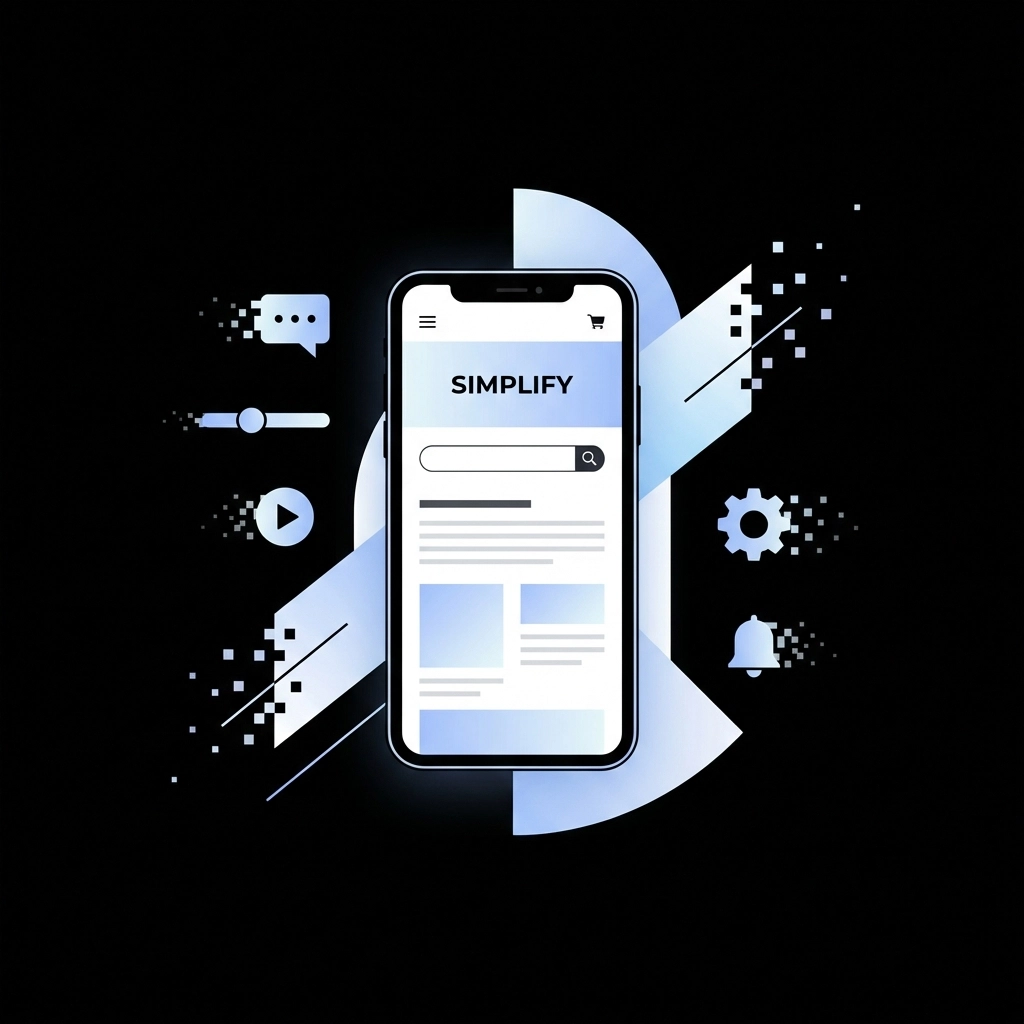
Here's a stat that should wake you up: 60-80% of your website visitors are coming from mobile devices. Yet many AI-generated sites look great on desktop and terrible on mobile.
The problem is that AI tools often prioritize the desktop experience and treat mobile as an afterthought. You end up with text that's too small to read, buttons that are impossible to tap, and layouts that completely break on smaller screens.
The Fix: Always design mobile-first, even with AI tools. Preview your site on multiple devices before you go live. Make sure body text is at least 16px (anything smaller is hard to read on mobile). Keep buttons large enough for thumb taps: think fingertip-sized, not mouse-cursor-sized.
Test everything: contact forms, image scaling, navigation menus, and page loading speeds. If something doesn't work perfectly on mobile, fix it before you launch.
5. Publishing AI Copy Without Human Touch
AI can write words, but it can't connect with your audience. AI-generated copy tends to be generic, stuffed with obvious keywords, and completely lacking in personality. Worse, it sometimes contains factual errors or makes promises you can't keep.
AI doesn't understand your unique selling points, your customers' pain points, or the local context that makes your business special.
The Fix: Always have a human review and edit AI-generated content. Ideally, this should be someone who understands marketing and SEO, not just grammar.
Read the copy out loud. Does it sound like how you actually talk to customers? Does it address their real concerns? Does it differentiate you from competitors? If not, rewrite it.
Use AI as a first draft, not a final product. The best websites combine AI efficiency with human insight and authenticity.

6. Ignoring SEO From Day One
This is the mistake that kills long-term success. AI tools can create pretty websites, but they often generate SEO disasters. They don't set up proper schema markup, conduct keyword research for your specific market, optimize images, or create logical internal linking structures.
Some AI platforms export bloated code that makes your site load slowly: which absolutely kills your search rankings.
The Fix: Build SEO into your site from the beginning, not as an afterthought. This means conducting keyword research for your specific market and location, optimizing all images with proper alt tags, setting up schema markup for local businesses, and creating a logical site structure.
If you're not comfortable handling this yourself, work with professionals who can ensure your site is built for search engines from day one. The best-looking site in the world won't help your business if nobody can find it.
7. Launching Without Testing (The Conversion Killer)
This one makes us cringe every time. Businesses spend weeks perfecting their AI-generated site, then launch it without testing anything. The result? Broken contact forms, dead links, slow loading speeds, and frustrated potential customers.
The Fix: Create a pre-launch testing checklist and stick to it. Test every single link on your site. Submit every contact form to make sure they work properly. Check your site speed using tools like Google PageSpeed Insights: aim for loading times under 3 seconds.
Get feedback from real people before you go live. Ask friends, family, or colleagues to browse your site and tell you if anything feels confusing or broken.
Most importantly, test your site's core conversion paths. Can visitors easily find your contact information? Is it clear what action you want them to take? Can they complete that action without any technical issues?
What's Next?
AI web design tools aren't going anywhere: they're getting better every day. The key is learning how to use them strategically rather than letting them dictate your entire design process.
In our next post, we'll dive deep into "SEO in 2026: Why Your Website Isn't Ranking (And 5 Quick Fixes That Actually Work)." We'll show you exactly how to turn your website into a lead-generation machine that actually shows up in search results.
The bottom line? AI can help you build a website faster and cheaper than ever before. But if you want a site that actually drives results for your business, you need to combine AI efficiency with human strategy, brand authenticity, and technical expertise.
That's where we come in. At Create Pro Media, we help businesses get the best of both worlds: AI-powered efficiency with professional oversight that actually converts visitors into customers.